
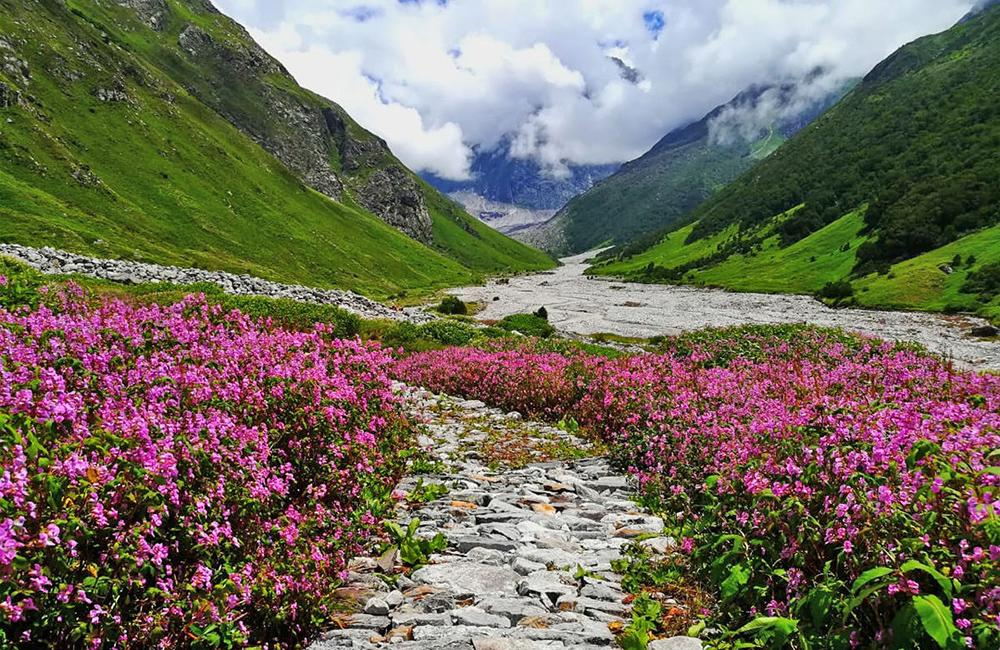
One of India's most captivating and abundant natural settings is Valley of Flowers National Park. This magnificent valley, which is tucked away high in Uttarakhand's Western Himalayas, is well-known for its expansive meadows that are covered in thousands of vibrant alpine flowers. The Valley of Flowers, a UNESCO World Heritage Site, is a wonderful location for hikers, photographers, nature enthusiasts, and anybody looking for tranquility in the middle of nature. It is among the most distinctive locations on earth because of its unparalleled beauty, spiritual atmosphere, and ecological significance.
Introduction to Valley of Flowers National Park
Valley of Flowers National Park is situated between 3,200 and 3,600 meters above sea level in the Chamoli region of Uttarakhand. The park is a part of the Nanda Devi Biosphere Reserve and covers an area of roughly 87 square kilometers. The valley is covered in snow for the majority of the year and only opens during the summer and monsoon season, when the genuine wonders of nature are shown.
Until British mountaineer Frank Smythe unintentionally found it during an expedition in 1931, the Valley of Flowers was mostly unknown to the outside world. He was so taken by its beauty that he gave it the moniker "Valley of Flowers," which has since drawn tourists from all over the world.
Natural Beauty and Landscape
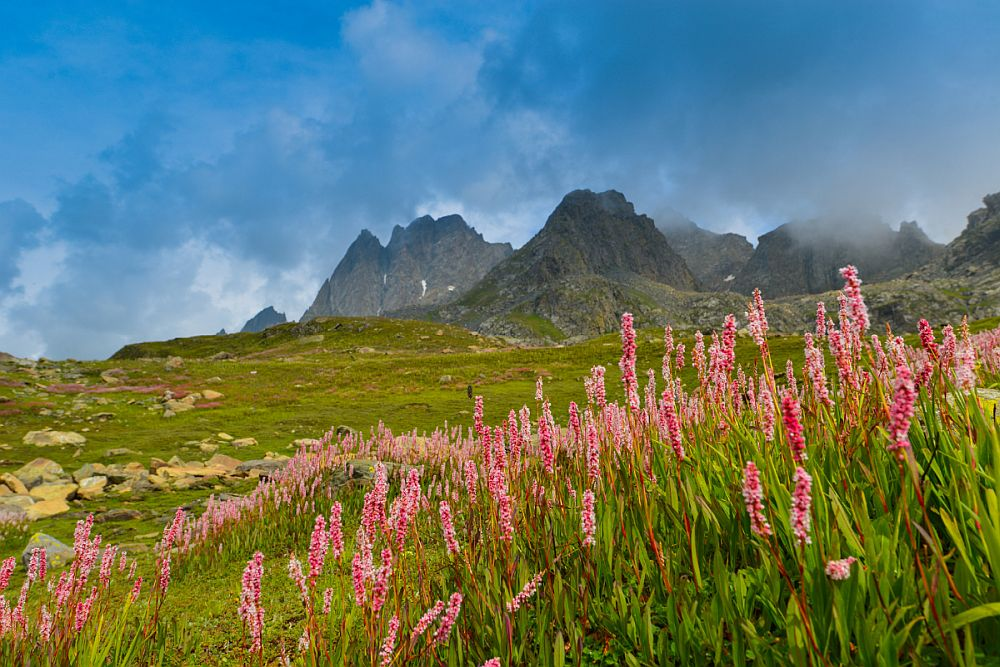
TThe Valley of Flowers is breathtakingly beautiful. Towering snow-covered mountains, tumbling waterfalls, glacial streams, and verdant meadows encircle the valley. The valley floor is covered in flowers of various sizes, shapes, and colors during the flowering season, transforming the entire area into a vivid carpet of colors.
Early in the morning, a mysterious atmosphere is created as mist gradually glides over the valley. The blooms fully open as the sun rises, displaying pink, purple, yellow, blue, red, and white hues. The valley's beautiful appeal is enhanced by the Pushpawati River's elegant flow through it.
Floral Diversity – A Botanical Wonderland
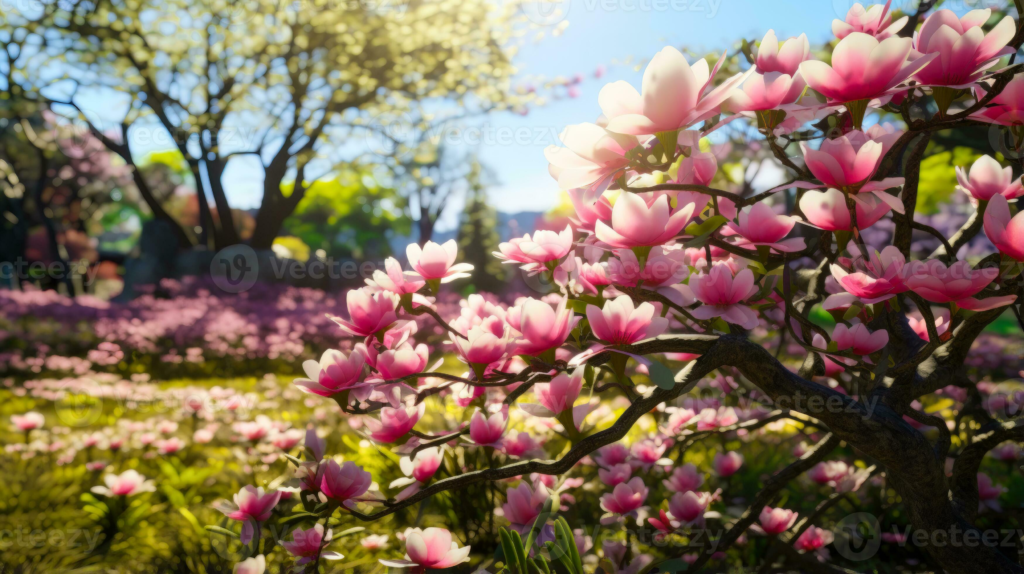
Valley of Flowers National Park is renowned for its extraordinary floral diversity. It is home to over 600 species of flowering plants, many of which are rare and endangered. Some of the most famous flowers found here include blue poppy, cobra lily, Himalayan bellflower, brahma kamal, primula, anemone, marigold, and geranium.
The blooming pattern of flowers changes throughout the season. Early summer sees fewer flowers, while mid-July to August is considered the peak blooming period. By September, the flowers start to fade, but the valley still remains lush and green.
For botanists and researchers, the Valley of Flowers is a living laboratory. Many medicinal plants are also found here, which have been used in traditional Ayurvedic medicine for centuries.
Wildlife in Valley of Flowers
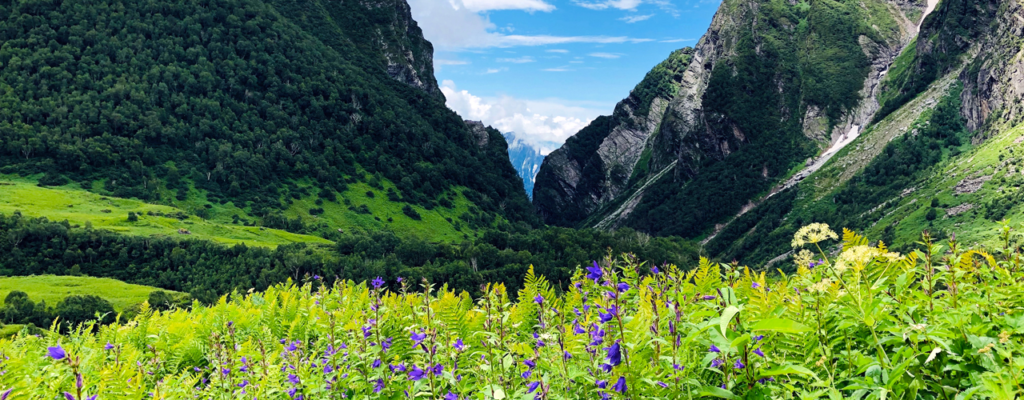
Although the valley is most famous for its flowers, it is also home to diverse wildlife. Due to its remote location and protected status, several rare and endangered species thrive here. Animals found in the park include the Asiatic black bear, Himalayan brown bear, snow leopard, musk deer, blue sheep (bharal), red fox, and Himalayan weasel.
The park is also a paradise for bird watchers. Bird species such as Himalayan monal, snow partridge, golden eagle, griffon vulture, and many species of finches can be spotted here. The peaceful environment and minimal human interference make it an ideal habitat for wildlife.
Best Time to Visit Valley of Flowers
The Valley of Flowers National Park is open to visitors from June to October, depending on weather conditions. The best time to visit is from mid-July to mid-August, when the flowers are in full bloom.
- June: Snow starts melting, and the valley begins to open. Flowers are fewer, but the views are stunning.
- July to August: Peak season for flowers. The valley is at its most colorful and vibrant.
- September: Fewer flowers, but clear skies and lush greenery make it ideal for trekking and photography.
The park remains closed during winter due to heavy snowfall.
How to Reach Valley of Flowers
Reaching the Valley of Flowers requires a combination of road travel and trekking, which adds to the adventure.
- By Air: The nearest airport is Jolly Grant Airport in Dehradun, about 300 km from Govindghat.
- By Train: The nearest railway station is Rishikesh, around 275 km away.
- By Road: From Rishikesh or Haridwar, one can travel by road to Joshimath and then to Govindghat.
- Trek: From Govindghat, a 13 km trek leads to Ghangaria, the base village. From Ghangaria, the Valley of Flowers is a 4 km trek.
The trek is moderately challenging but well-marked and suitable for beginners with basic fitness.
Trekking Experience
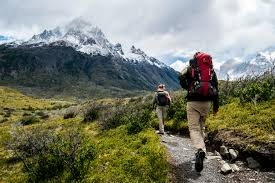
The trek to Valley of Flowers is as beautiful as the destination itself. The trail passes through dense forests, wooden bridges, waterfalls, and mountain streams. The fresh mountain air and soothing sound of flowing water make the journey unforgettable.
Trekkers must carry proper trekking shoes, rain gear, warm clothing, and basic medical supplies. Hiring a local guide is recommended for first-time visitors.
Entry Fees and Timings
Valley of Flowers National Park has a regulated entry system to preserve its delicate ecosystem.
- Entry Fee: A nominal fee is charged for Indian and foreign tourists.
- Timings: The park is usually open from 7:00 AM to 5:00 PM.
- Visitors are not allowed to stay inside the park overnight.
Photography is allowed, but plucking flowers or disturbing wildlife is strictly prohibited.
Nearby Attractions
A visit to the Valley of Flowers can be combined with other famous destinations:
- Hemkund Sahib: A sacred Sikh pilgrimage site located near Ghangaria.
- Joshimath: A spiritual town and gateway to several Himalayan destinations.
- Badrinath Temple: One of the Char Dham pilgrimage sites.
- Auli: A popular hill station known for skiing and panoramic views.
Spiritual and Cultural Significance
The Valley of Flowers is not only a natural wonder but also holds spiritual importance. The nearby Hemkund Sahib attracts thousands of pilgrims every year. Many locals believe the valley has divine energy, and ancient texts mention a mythical flower-filled valley resembling this region.
The peaceful environment, combined with spiritual surroundings, makes it an ideal place for meditation and self-reflection.
Travel Tips for Visitors
- Always check weather conditions before planning your trip.
- Carry eco-friendly products and avoid plastic.
- Respect local culture and traditions.
- Maintain physical fitness for trekking.
- Follow all park rules to help conserve nature.
SIMILAR BLOGS
Bhimtal Trip 2026 read more